
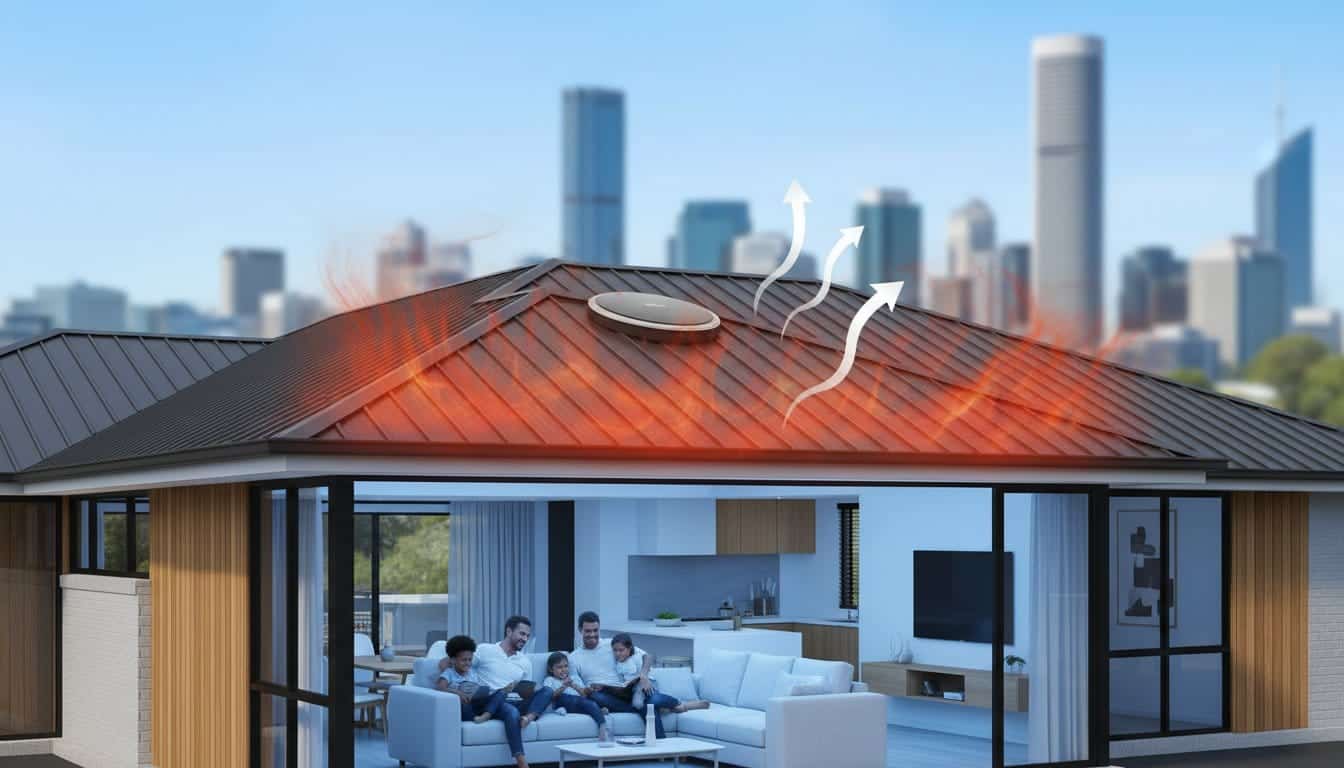
Last January, a homeowner in Chermside recorded a staggering 70 degrees Celsius inside their roof space, a temperature high enough to degrade insulation and trap moisture against the structural timber. You likely know the feeling of walking into a room that stays stiflingly hot long after the sun goes down because your ceiling is acting like a giant radiator. It’s a common struggle in our subtropical climate, where trapped heat often forces air conditioners to work 30 percent harder than necessary. Implementing professional roof ventilation solutions brisbane families can rely on is the most practical way to break this cycle and restore comfort to your living spaces.
We believe your home should be a sanctuary, not a heat trap that drives up your monthly expenses. By reading on, you’ll discover how the right ventilation setup can lower your indoor temperature by up to 8 degrees and eliminate the damp conditions that cause mould to thrive. We’ll guide you through the most effective solar and wind driven systems specifically designed to handle Brisbane’s unique humidity and intense summer storms.
Key Takeaways
- Learn how Brisbane’s 30°C days can trap 70°C heat in your roof cavity and why effective air circulation is essential for your home’s health.
- Discover the most effective roof ventilation solutions brisbane homeowners can use to balance indoor temperatures and significantly reduce cooling costs.
- Understand the principle of thermal buoyancy and why a functional system requires a strategic balance of both intake and exhaust vents.
- Explore the “dual-action” approach that combines modern ventilation with premium heat-reflective coatings to maximize your roof’s lifespan.
- Gain insights from over 35 years of local experience on choosing high-quality, low-maintenance systems built to withstand the unique Queensland climate.
Why Roof Ventilation Solutions in Brisbane are Non-Negotiable
Living in South East Queensland means dealing with intense solar radiation for most of the year. On a standard 30°C day in Brisbane, the temperature inside a sealed roof cavity can easily climb to 70°C. This trapped heat creates a massive thermal reservoir that sits directly above your living spaces. Without a functional way to exhaust this air, your home essentially becomes an oven. It makes it nearly impossible to maintain a comfortable indoor climate during the summer peak between November and March.
Roof ventilation is the mechanical or passive process of circulating air to balance the temperature between your attic space and the outdoors. It relies on a cycle of drawing cooler air in through the eaves and pushing scorching, buoyant air out through the ridge or specialized vents. This airflow is essential for regulating temperature and protecting the structural integrity of your property. Relying on insulation alone is a common mistake. While insulation slows down the transfer of heat, it eventually becomes saturated. Without effective roof ventilation solutions brisbane homes often suffer from heat soak, where the ceiling continues to radiate heat into the house long after the sun has set.
To better understand how these systems interact with modern Australian building standards, watch this helpful video:
The long-term impact on your roof’s lifespan is another critical factor for homeowners. Extreme thermal cycles cause materials to expand and contract at different rates every day. In Brisbane, we frequently see tile pointing that has become brittle and cracked due to years of excessive heat exposure. Similarly, metal fasteners on Colorbond roofs can work themselves loose as the sheets shift under 70°C temperatures. Keeping the roof cavity cooler helps preserve these materials. This can extend the life of your roof’s bedding and pointing by up to 25%, saving you thousands in premature restoration costs.
The Hidden Danger of Brisbane’s Humidity
Brisbane’s average humidity levels often exceed 65% during the humid summer months. When warm, moist air gets trapped in an unventilated roof, it eventually hits the dew point as temperatures drop at night. This causes condensation to form on the underside of your roofing material. Over a period of 2 to 3 years, this moisture drips onto your ceiling joists and insulation, leading to structural timber rot and toxic mould growth. A consistent flow of air is the only reliable way to keep these spaces dry.
Energy Efficiency and Your Wallet
Reducing the temperature in your roof space has a direct impact on your air conditioning efficiency. When the attic is 70°C, your ducted AC unit has to work significantly harder to cool the rooms below because the ductwork itself is sitting in a furnace. High-quality roof ventilation solutions brisbane residents install can reduce attic temperatures by up to 20°C. Investing in high-quality passive vents provides a permanent return on investment by lowering your quarterly electricity bills without any ongoing running costs. By mitigating heat soak, you ensure that your home cools down faster in the evening, allowing your family to sleep comfortably without running the air conditioner at maximum capacity.
How Modern Roof Ventilation Systems Work
Understanding the physics of your roof space is the first step toward a more comfortable home. During a typical Brisbane summer, attic temperatures can soar to 65°C. This trapped heat doesn’t just stay in the roof; it radiates through your ceiling insulation and into your living areas. Modern systems rely on the principle of thermal buoyancy. Because hot air is less dense than cool air, it naturally wants to rise. Effective roof ventilation solutions brisbane residents rely on use this natural movement to flush out heat before it settles.
A functional system requires a balance of intake and exhaust. You can’t efficiently pull air out of a sealed box. Eave vents act as the intake, allowing cooler, ambient air to enter the roof cavity from the lowest point. As this fresh air enters, it pushes the lighter, hot air upward toward the exhaust vents located near the ridge. This continuous cycle is a core component of passive cooling strategies that reduce your reliance on expensive air conditioning.
Getting the math right is vital for performance. We generally follow the 1:300 rule, which suggests one square metre of ventilation for every 300 square metres of ceiling area. For a standard 200-square-metre Brisbane home, this usually equates to at least two high-quality exhaust units paired with eight to ten eave vents. If your roof pitch is shallow, you might need to increase this ratio to ensure air doesn’t become stagnant in the corners of the roof or behind internal bulkheads.
Wind-Driven Ventilation (Whirlybirds)
Traditional turbine vents, or whirlybirds, operate using the Venturi effect. As wind blows against the curved vanes, it creates a low-pressure zone inside the turbine that sucks air out of the roof. These are cost-effective but depend entirely on local breeze. In low-wind areas, their efficiency drops. We always recommend units with high-quality stainless steel or teflon bearings. Cheap bearings often seize or develop a rhythmic squeak after just 24 months of exposure to the elements, whereas premium versions remain silent for decades.
Solar-Powered and Active Ventilation
Solar-powered fans offer a significant performance jump over wind-driven units. While a standard whirlybird might move 100 to 150 cubic metres of air per hour (CMH), a solar fan can move upwards of 2,100 CMH. These units work hardest when the sun is at its peak, which is exactly when your roof needs the most help. For homes with specific moisture issues or complex roof shapes, we often suggest mains-powered active vents. These can be set to run 24/7 or triggered by a thermostat, providing consistent protection even on humid, still nights. If you’re unsure which system fits your property, our team can provide a detailed roof assessment to find the right balance for your budget and house design.
Harnessing the sun’s power is becoming a key strategy for modern homes. While solar fans tackle ventilation, another growing trend is the integration of solar technology directly into the roofing materials themselves, turning the entire roof into an energy-producing asset. To see examples of how this is being implemented, you can discover Rainier Roofing LLC, a US-based company specializing in these advanced systems.
Comparing the Best Ventilation Options for Brisbane Homes
Brisbane’s climate is demanding. With over 2,800 hours of sunshine every year and summer humidity levels often exceeding 70%, your roof cavity can reach temperatures of 65°C without proper airflow. Selecting the right roof ventilation solutions brisbane involves balancing your upfront budget with the specific performance needs of your property. We’ve spent 35 years observing how different systems handle the intense Queensland sun, and the results vary significantly based on the technology you choose.
The Australian Government’s guide to ventilation highlights how passive systems rely on pressure differences and natural convection to move air. While these methods are traditional, modern Brisbane homes often require more active intervention to stay cool. You should evaluate any system based on its ability to exhaust air during a mid-January heatwave when wind speeds are low and thermal mass is high.
Whirlybirds vs. Solar Vents: The Brisbane Showdown
For budget-conscious homeowners, the whirlybird remains a popular choice for roof restorations. They are reliable and cost between A$150 and A$350 per unit installed. However, they rely entirely on wind speed. If there’s no breeze, the heat stays trapped. In contrast, solar vents are the preferred choice for large, modern homes with complex rooflines. These units use a high-torque motor to pull up to 2,100 cubic metres of air per hour, which is roughly 15 to 20 times the capacity of a standard whirlybird.
- Whirlybird: Costs A$150-A$350; moves 100-150 m3/hr; lasts 10-15 years.
- Solar Vent: Costs A$700-A$1,100; moves 2,100-2,800 m3/hr; lasts 15-20 years.
Noise levels are a major factor for light sleepers. Older whirlybirds can develop a rhythmic squeak if the bearings fail after five or six years of heavy use. High-quality solar vents use brushless DC motors that operate at under 30 decibels. This is quieter than a whisper, making them ideal for installation directly above bedrooms. From an aesthetic standpoint, solar vents offer a low-profile design that sits flush against the roof, whereas whirlybirds are more prominent and can disrupt the clean lines of a contemporary home.
Special Considerations for Tile vs. Metal Roofs
Your roof material dictates the installation process. Colorbond and other metal roofs require custom-fit flashing to prevent leaks during Brisbane’s notorious summer afternoon storms. We ensure every roof ventilation solutions brisbane installation on metal surfaces uses premium sealants and fasteners that won’t corrode over time. It’s a meticulous process that prevents water ingress even during 100km/h wind gusts.
Terracotta and concrete tile roofs present different challenges. We don’t just “pop” a tile out; we use specialized tile-vent kits that maintain the structural integrity of the roof. A watertight seal is vital here because moisture trapped under tiles can lead to mold growth in your ceiling insulation. We also check local Brisbane building codes for bushfire-prone areas like The Gap or Brookfield. In these zones, vents must meet Bushfire Attack Level (BAL) ratings, typically requiring stainless steel ember guards with a maximum aperture of 2mm to comply with AS 3959. Our team ensures your home remains safe and compliant while maximizing cooling efficiency.
The ‘Dual-Action’ Strategy: Ventilation and Heat-Reflective Coatings
Brisbane’s summer sun is relentless. Relying on vents alone often isn’t enough when your roof tiles are literally baking at 70 degrees Celsius. While airflow is vital, it’s much more effective to stop the heat from entering your home in the first place. This is where our dual-action strategy comes in. By combining premium heat-reflective coatings with the right roof ventilation solutions brisbane residents can achieve a significantly cooler living environment.
Think of your roof like a giant radiator. If the surface is scorching, it will continue to radiate heat into your ceiling space long after the sun goes down. Ventilation works to flush this hot air out, but it’s fighting an uphill battle if the tiles remain hot. Heat-reflective coatings act as a shield. These specialized paints use advanced pigments to bounce solar radiation back into the atmosphere. When we apply these coatings at Brisbane Roof & Paint, we’ve seen surface temperatures drop by as much as 20 degrees. This synergy means the ventilation system doesn’t have to work as hard, and your air conditioning costs can drop by up to 25 percent during peak summer months.
A 2022 project we completed in Coorparoo serves as a perfect example of this in action. The homeowners reported a 14-degree reduction in their internal upstairs temperature after we applied a high-reflectance coating and installed two high-capacity solar vents. This wasn’t just a minor tweak; it changed how they used their home during the day. This two-pronged approach addresses both the source of the heat and the removal of trapped air.
- Reflective Coatings: Stop up to 90 percent of infrared heat from entering the roof material.
- Ventilation: Extracts the remaining heat and moisture that penetrates the barrier.
- Longevity: Cooler roofs experience less thermal expansion and contraction, which helps your tiles and bedding last longer.
Reflecting the Queensland Sun
The effectiveness of roof paint is measured by Total Solar Reflectance (TSR). A standard dark tile might have a TSR of only 5 percent, meaning it absorbs 95 percent of the sun’s energy. Our premium coatings can lift that TSR to over 70 percent. This doesn’t mean you’re limited to bright white roofs. Modern “cool roof” technology allows even mid-tone greys and charcoals to reflect significantly more heat than traditional paints. These coatings also provide a thick, protective membrane that shields your roof from the intense UV degradation common in South East Queensland.
When to Install Ventilation
The best time to implement roof ventilation solutions brisbane wide is during a full roof restoration. Since our team is already on the roof with scaffolding in place, we can integrate vents seamlessly into the new aesthetic. This ensures the flashing is installed under the tiles or metal sheets before the final coating is applied, creating a watertight seal that looks like part of the original design. Professional flashing is critical; it’s the difference between a cool home and a surprise leak during a February thunderstorm. Our 30 years of experience ensures that every installation is meticulous and built to handle local weather conditions.
If you want to transform your home’s comfort levels this summer, contact our family owned business for professional roof restoration and ventilation services today.
Trusting Brisbane Roof & Paint for Your Ventilation Needs
Choosing the right team to protect your home from the intense Queensland heat is a decision that impacts your comfort for decades. At Brisbane Roof & Paint, we bring over 35 years of hands-on experience to every project. We’ve worked on local homes since 1988, witnessing firsthand how Brisbane’s climate patterns put immense stress on residential roofing materials. This deep history means we don’t guess; we know exactly which roof ventilation solutions brisbane homeowners need to achieve a genuine drop in indoor temperatures during a 40-degree January afternoon.
We refuse to cut corners with inferior materials that degrade under high UV levels. Our team exclusively uses premium, Australian-tested products designed to survive both scorching heat and the sudden pressure of tropical storms. Because we’re a family-owned business, our reputation is tied to every tile we shift and every vent we install. You won’t deal with a rotating door of subcontractors or faceless sales agents. Instead, you receive personal accountability and a level of craftsmanship that only comes from a local team invested in the community. Every project begins with a free, comprehensive inspection where we assess the specific thermal load of your attic space rather than offering a generic estimate over the phone.
Our Professional Installation Process
We don’t believe in “one-size-fits-all” ventilation kits found at big-box hardware stores. These generic options often fail to account for the unique 25-degree pitch or specific orientation of your roofline. Our process involves meticulous preparation to ensure every installation is 100% leak-free. We treat your roof as a complex structural system, not just a flat surface. Since we are also accredited master painters, we ensure your new vents match your existing roof color perfectly. Whether your home features Colorbond Monument, Surfmist, or a custom terracotta tile shade, the finish will be seamless and aesthetically pleasing. We take the time to seal every penetration with industrial-grade flashing that stands up to the heaviest Brisbane downpours.
Book Your Roof Health Check Today
Our comprehensive roof and ventilation assessment goes far beyond a simple visual check from the driveway. We perform a detailed 20-point analysis of your current airflow levels, look for signs of moisture trapped in your ceiling space, and evaluate the integrity of your existing insulation. Following this check, we provide a fixed-price quote for the recommended roof ventilation solutions brisbane residents can rely on. This means the price you see is the final price you pay, with no hidden extras or surprise costs added halfway through the job. We value honesty and clear communication, ensuring you understand the technical benefits of every recommendation we make. Contact the Brisbane Roof & Paint team for a free quote today to secure your home’s comfort and long-term structural health.
Protect Your Brisbane Home from the Heat Today
Investing in high-quality roof ventilation solutions brisbane homeowners trust is the most effective way to lower indoor temperatures and significantly reduce your quarterly energy bills. By combining modern ventilation systems with premium heat-reflective coatings, you can lower your roof’s surface temperature by up to 20 degrees Celsius. This dual-action approach doesn’t just improve your daily comfort; it extends the life of your roof materials by preventing moisture buildup and heat fatigue. It’s a practical investment that pays for itself through long-term structural protection.
Brisbane Roof & Paint brings over 35 years of local experience to every project. As a family owned and operated business, we prioritize meticulous craftsmanship and honest advice. Our team of accredited master painters ensures every installation meets a high standard of quality. We’ve spent three decades helping local families protect their most valuable asset with reliable, professional service. You can rely on our proven track record to deliver results that last. Don’t let another Brisbane summer take its toll on your home’s comfort and structural integrity.
Get a Free Roof Ventilation & Restoration Quote
We look forward to helping you create a cooler, more durable home for your family to enjoy for years to come.
Frequently Asked Questions
How many whirlybirds do I need for a standard 3-bedroom Brisbane home?
A standard 3-bedroom Brisbane home typically requires 2 to 3 whirlybirds for effective cooling. Most 3-bedroom houses cover roughly 160 square metres of floor space. Since one 300mm whirlybird services about 75 square metres, two units provide the minimum coverage needed. For homes with complex roof shapes, we often suggest a third unit to prevent hot spots from forming in isolated corners.
Do roof vents leak during heavy Brisbane storms?
High quality roof vents don’t leak during heavy Brisbane storms when they’re installed by an experienced professional. We use premium flashing and industrial grade sealants that are rated for Australian conditions. These units are tested to withstand rainfall of 200 millimetres per hour without any water entry. Our 30 years of experience ensures that every vent we fit is completely watertight and reliable for your peace of mind.
Will roof ventilation help reduce mould in my bathroom and bedrooms?
Effective roof ventilation solutions Brisbane homeowners choose can reduce the risk of mould by 75 percent. Mould grows when warm, moist air gets trapped in your roof and condenses on cool surfaces. By constantly replacing this damp air with fresh outdoor air, you stop moisture from soaking into your ceiling plaster. This keeps your bedrooms and bathrooms much drier and prevents expensive remediation costs later.
Can I install a roof vent myself, or do I need a professional?
It’s best to hire a professional for roof vent installation to avoid safety risks and potential leaks. Working on a roof is dangerous, and an incorrect seal can lead to A$600 in ceiling repairs after the first storm. Our family owned business has over 35 years of experience in the industry. We use high standard techniques to ensure every unit is perfectly integrated with your roof.
What is the difference between a whirlybird and a solar-powered vent?
The main difference is that a whirlybird is wind-driven, whereas a solar vent uses a 25-watt motor powered by sunlight. Solar vents are significantly more powerful, moving up to 2,500 cubic metres of air per hour. A traditional whirlybird might only move 120 cubic metres in the same timeframe. While a whirlybird is cheaper upfront, a solar vent provides much better cooling for your home.
Do solar roof vents work on cloudy days in Brisbane?
Solar vents continue to operate on cloudy days, although their extraction speed decreases by roughly 40 percent. These units are designed with sensitive photovoltaic cells that harvest energy from indirect sunlight. Even during a week of rainy weather in Brisbane, the vent will still turn to keep air moving. This prevents moisture buildup in your roof cavity, which is vital for protecting your home’s structural timber.
Does roof ventilation affect my home’s insulation performance?
Roof ventilation improves your insulation’s performance by preventing it from becoming a heat sponge. On a 32 degree Celsius day, an unventilated roof can reach 65 degrees. This extreme heat eventually penetrates your R4.0 or R5.0 insulation and enters your home. By lowering the roof temperature by 15 degrees, ventilation helps your insulation keep your living spaces cooler and reduces your air conditioning costs by 20 percent.
Are whirlybirds noisy when it’s windy?
Modern, high quality whirlybirds are designed to be silent even during 50 kilometre per hour wind gusts. We use units equipped with premium stainless steel bearings that prevent the grinding or squeaking sounds associated with older models. If you hear noise, it’s often a sign of a 10-year-old unit reaching the end of its life. Our professional team ensures every installation is balanced and secure for quiet operation.