
On a wet Tuesday evening in Paddington, a local homeowner noticed a rhythmic “drip-drip” hitting their floorboards, followed by a dark, heavy stain spreading across the ceiling plaster. If you’ve found yourself in a similar situation, it’s completely natural to feel a sense of panic about potential structural damage or hidden electrical hazards. You want to protect your family’s home, but the stress of finding a reliable tradesperson while water is entering your living room can feel overwhelming. We understand these concerns because we’ve helped Brisbane families navigate these exact emergencies for over 35 years.
This guide explains exactly what to do if your roof is leaking to minimize property damage and ensure your home remains a safe haven. It’s important to act quickly but calmly to prevent long term issues like mould or ceiling collapse. We’ll walk you through the immediate steps to contain the water, how to manage your insurance requirements, and the best way to secure a permanent, high-quality repair from a trusted local professional. By following this methodical approach, you can move from initial anxiety to the peace of mind that comes with a job done right.
Key Takeaways
- Learn the essential safety steps to take immediately, such as managing electrical risks and containing water to minimize interior property damage.
- Discover what to do if your roof is leaking by identifying common Brisbane culprits like cracked tiles or rusted metal sheets before the next storm hits.
- Understand the critical safety risks of DIY repairs and why professional height safety gear is vital for navigating slippery roofs and hidden electrical hazards.
- Navigate the complexities of insurance claims by learning the difference between “sudden event” storm damage and gradual wear and tear.
- Explore how a full roof restoration and heat-reflective coatings provide a long-term, premium solution that outlasts temporary patch repairs.
Immediate Action: What to Do If Your Roof Is Leaking Right Now
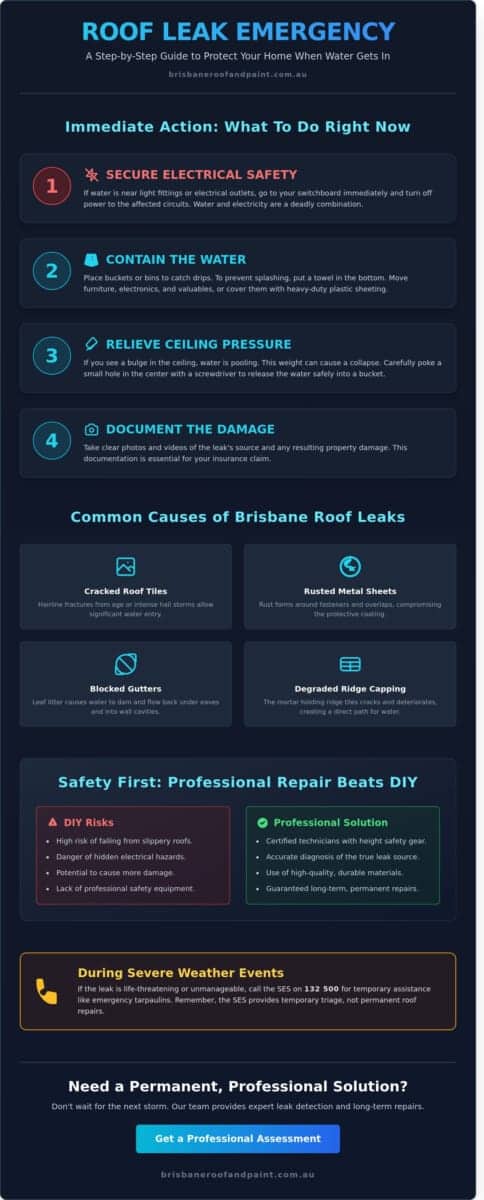
Finding water dripping from your ceiling is stressful, especially during a heavy Brisbane downpour. Your first priority isn’t the roof itself, but the safety of everyone inside. If water is pooling near light fittings or electrical outlets, head straight to your switchboard and turn off the power to those circuits. Water and electricity are a dangerous combination, and taking this 30-second precaution prevents a serious hazard. Knowing exactly what to do if your roof is leaking starts with securing your home’s electrical safety.
To better understand this concept, watch this helpful video:
Once the area is safe, focus on containing the mess. Grab buckets or plastic bins to catch the drips. If the water is splashing, place an old towel in the bottom of the container. You should also move any furniture, electronics, and valuables away from the affected area. For items that are too heavy to move, cover them with heavy-duty plastic sheeting. Many leaks are caused by damaged or deteriorated flashing, which allows water to track along internal beams before it even hits your plasterboard.
If you notice a bulge in your ceiling, it means water is pooling on top of the plasterboard. This weight can cause a sudden, messy collapse. Use a screwdriver or a small drill bit to carefully poke a hole in the centre of the bulge. This relieves the pressure and directs the water into your bucket. While you manage the mess, take clear photos and videos of the leak and any damage. This documentation is vital when you eventually ask your insurer what to do if your roof is leaking and you need to file a claim.
Triage for Your Ceiling and Interior
To stop water from splashing out of your bucket, tie a piece of string to the leak source and lead it down into the container. This guides the flow silently and keeps your floors dry. If you have large rugs, roll them up and move them to a dry room immediately. Mark the leak boundaries with a pencil once the area is dry to help our team identify the entry point.
When to Call the Brisbane SES
During severe weather events, the State Emergency Service (SES) is available on 132 500. You should call them if the leak is causing a life-threatening situation or if the damage is so extensive that you can’t safely manage it yourself. The SES provides temporary help, such as installing emergency tarpaulins to prevent further internal damage. It’s important to remember that they offer temporary triage only. They don’t provide permanent roof repairs or restoration services. Once the storm passes, you’ll need a professional team to provide a long-term solution.
Identifying the Source: Common Causes of Leaks in Brisbane Roofs
Finding the exact entry point is the first challenge when you are deciding what to do if your roof is leaking. Water is deceptive; it often enters at one point and travels along internal rafters or insulation before appearing on your ceiling. Our team has spent over 30 years tracing these paths, and we’ve found that most Brisbane leaks stem from a few specific culprits. Identifying these early can prevent a small drip from becoming a structural headache.
- Damaged or cracked roof tiles: These are often the result of age or the intense hail storms that hit South East Queensland. Even a hairline fracture in a terracotta tile can let in significant amounts of water during a storm.
- Rusted metal sheets: On older corrugated iron roofs, rust often develops around the fasteners or in the laps where sheets overlap. Once the protective coating fails, the subtropical humidity accelerates the decay.
- Blocked gutters and downpipes: When leaf litter from nearby gum trees builds up, water cannot flow away fast enough during a downpour. This causes water to back up and flow under the eaves or into the wall cavities.
- Degraded ridge capping: The mortar (bedding and pointing) that holds your ridge tiles in place eventually cracks due to high UV exposure. This leaves the peak of your roof vulnerable.
- Failed flashings: The metal transitions around chimneys, skylights, or solar panel mounts are common failure points. If these have pulled away or the sealant has dried out, water will find a way in.
Tile vs. Metal Roof Vulnerabilities
Different materials face unique challenges in our environment. Terracotta tiles are beautiful, but they can suffer from “weeping” during prolonged periods of rain. This happens when the tile becomes so saturated that moisture begins to soak through to the underside. In contrast, metal roofs are prone to “capillary action.” During high winds, water is sucked into the narrow gaps between overlapping metal sheets, pulling moisture uphill and into your roof space. If your leak is a result of a major weather event, you might find yourself navigating insurance claims to cover the restoration costs. For long-term solutions, our guide on roof repairs Brisbane explains how we address these material-specific issues with meticulous craftsmanship.
The Impact of the Brisbane Climate
The Queensland sun is exceptionally harsh, and it degrades standard roof sealants much faster than in cooler southern states. While a sealant might last fifteen years in Melbourne, it may only last eight to ten years in Brisbane before becoming brittle. Our tropical downpours also dump a massive volume of water in a very short window, often overwhelming gutter systems designed for lighter rain. The constant cycle of intense heat followed by rapid cooling causes roofing materials to expand and contract, which eventually leads to shifted tiles or loosened screws. This thermal movement is a primary reason why regular maintenance is vital for local homes.
If you’re unsure where the water is coming from, it’s best to have a professional look. You can contact our family-owned team for a thorough inspection and honest advice on the best way forward.
Safety and Risks: Why Professional Repair Beats DIY
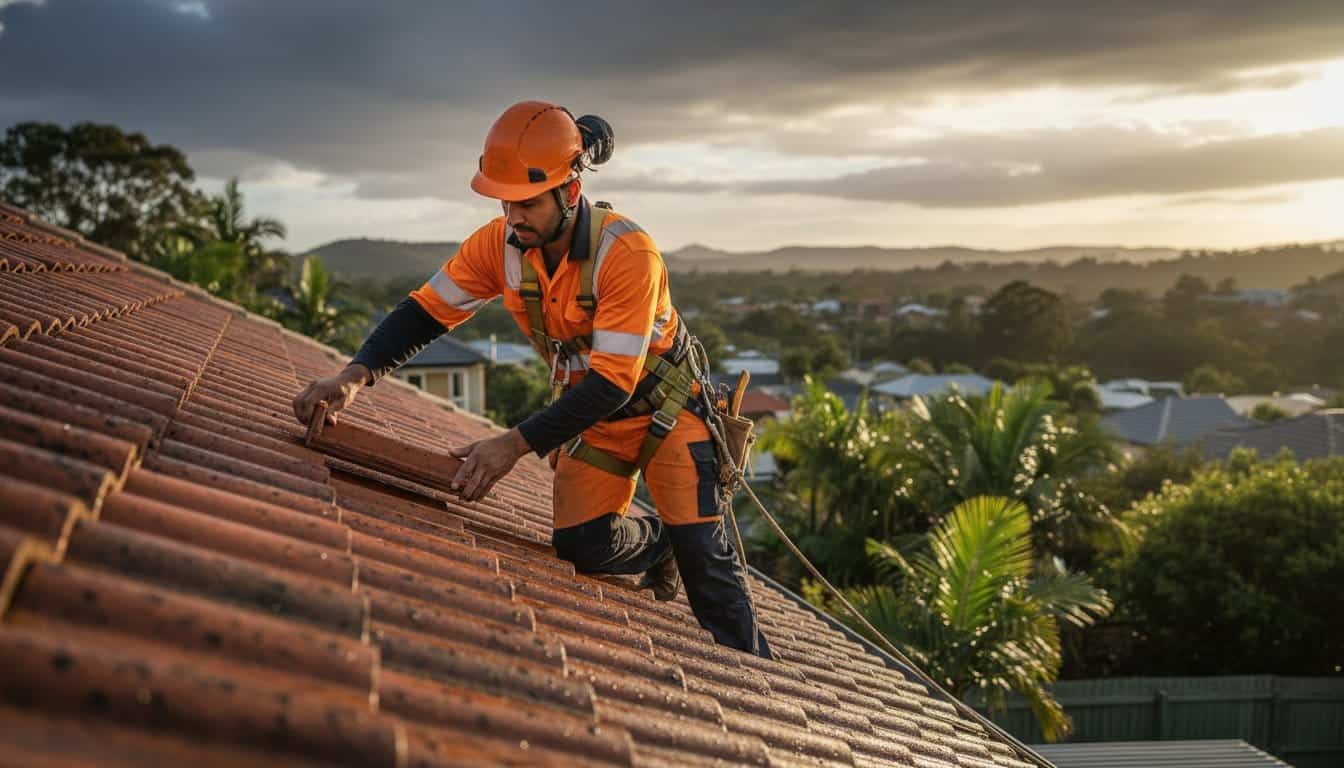
Understanding what to do if your roof is leaking involves prioritising your physical safety above all else. While your first instinct might be to grab a ladder, climbing onto a wet roof is a high-risk activity that often leads to severe injury. Roof surfaces become incredibly slick during Brisbane’s heavy rain events. Safe Work Australia reports that falls from heights remain a leading cause of fatalities in the construction industry, and residential roofs lack the anchor points and safety rails found on commercial sites.
The dangers aren’t limited to falls. Water entering your ceiling cavity often pools around electrical wiring, light fittings, and solar inverter connections. This creates a hidden, lethal risk of electrocution for anyone poking around in the dark, damp space. Beyond the immediate physical threats, DIY “fixes” like silicone patches usually do more harm than good. These temporary seals often trap moisture against timber battens and rafters, accelerating wood rot and structural decay. A professional assessment is the safest way to determine what to do if your roof is leaking and ensure the repair lasts for decades rather than days.
The Danger of the “Quick Fix”
Stepping on the wrong part of a concrete or terracotta tile can instantly cause it to snap. This creates fresh entry points for water that didn’t exist before you climbed up. Poorly executed repairs also lead to long-term issues like mould growth inside your insulation, which can cost thousands of dollars to remediate. We often find that professional roof cleaning is a much more effective way to spot hidden cracks and tile degradation before they turn into a midnight emergency.
What to Look for in a Brisbane Roofer
You need a partner who understands the specific challenges of the Queensland climate. Always verify that your contractor holds a valid QBCC (Queensland Building and Construction Commission) licence. This ensures the work meets state standards and provides you with legal protection. We believe choosing a family-owned business is important because it guarantees personal accountability and local knowledge. Our team has serviced Brisbane homes for over 30 years, focusing on craftsmanship rather than quick turnarounds. Before any work begins, insist on a comprehensive inspection report. This document removes the guesswork, showing you exactly where the faults lie so you can make an informed decision about your home’s protection.
Navigating Insurance and Costs for Roof Leak Repairs
Understanding what to do if your roof is leaking involves managing both the water and the paperwork. Most Australian insurance policies focus strictly on the cause of the damage. If a sudden storm or a fallen branch causes a hole, your insurer typically covers the resulting internal damage. However, they rarely pay for the actual roof repair if the leak started because of long-term neglect or general wear and tear. You’ll find that insurers distinguish between “sudden events” and “gradual deterioration” when assessing your claim.
Does Insurance Cover a Leaking Roof?
Insurers expect homeowners to maintain a “duty of care” for their property. This means you’re responsible for keeping the roof structure sound. While your policy might cover a new ceiling after a storm, it won’t cover the rusted valley that caused the leak in the first place. Investing in roof restoration Brisbane serves as a proactive safeguard. It provides a documented history of maintenance that makes it much harder for insurers to claim the damage was due to neglect.
To speed up your claim, provide clear documentation to your provider. Take high-resolution photos of the entry point and the internal damage as soon as it’s safe. Keep a record of the last time you had a professional inspection or cleaning. This evidence proves you’ve been diligent, which is essential when seeking a payout for “sudden event” damage like hail or high winds.
Estimating Repair vs. Restoration Costs
A single-point repair for a cracked tile or a loose flashing might cost between A$250 and A$600. While this is a quick fix, it doesn’t address the overall health of an ageing roof. A full-section overhaul or a restoration is often more economical over a 10-year period. For example, modern liquid rubber coatings offer a seamless, cost-effective leak-proofing solution that extends the life of your metal or tile roof without the price tag of a full replacement.
When you review professional quotes, look for a detailed breakdown of leak identification and material costs. A professional quote should be transparent and thorough, covering everything from site setup to final cleanup. Don’t be tempted by the lowest price you find. The cheapest quote often leads to the most expensive re-repairs because it usually skips essential preparation steps or uses inferior sealants. Quality craftsmanship is an investment that protects your home’s value.
If you’re looking for someone you can rely on to assess your damage with honesty and precision, our team is here to help. Contact Brisbane Roof & Paint for a professional assessment of your roof today.
Long-Term Prevention: Restoration and Heat Reflective Coatings
While knowing what to do if your roof is leaking in an emergency is vital, the ultimate goal is to ensure you never have to deal with buckets in your living room again. Patching individual leaks might provide a temporary fix, but it often ignores the underlying degradation of the entire structure. A professional roof restoration provides a comprehensive solution that secures your home for decades rather than just a few months. For homeowners with tile roofs, this involves essential re-bedding and re-pointing to ensure ridge caps remain stable and water-tight against Queensland’s heavy storm seasons.
The Restoration Process Explained
A high-quality restoration is a meticulous four-stage process designed to weather-proof your entire home. We start with a high-pressure clean to remove decades of dirt, grit, and moss. Next, we perform essential repairs by replacing broken tiles or treating rusted sections. If you have an iron roof, we apply specialized metal roof roofing protection to prevent corrosion and structural weakening. After repairs, we apply a high-adhesion primer followed by a durable triple-coating system. This creates a seamless barrier that protects every square inch of your roof, not just the spots that previously leaked.
Cooling Your Home While Protecting Your Roof
In Brisbane, the sun is as much of a threat to your roof’s integrity as the rain. Premium heat-reflective coatings can reflect up to 90% of solar radiation away from your home. This technology significantly reduces the surface temperature of your roof, which can lower internal temperatures by several degrees. By choosing these advanced coatings, you improve your home’s energy efficiency and reduce cooling costs during the humid summer months. If you’re unsure about the current state of your tiles or metal sheets, Contact Brisbane Roof & Paint for a professional leak inspection today.
To keep your roof in peak condition, we recommend setting up a simple biannual maintenance schedule. Catching small issues early is the best way to avoid expensive emergency repairs. A standard maintenance checklist should include:
- Professional inspections twice a year, ideally before the summer storm season begins in October.
- Clearing gutters and downpipes to prevent water back-flow under the eaves.
- Checking for cracked mortar or loose flashing after significant weather events.
- Trimming overhanging tree branches to prevent physical damage and debris buildup.
Taking a proactive approach means you won’t have to scramble to figure out what to do if your roof is leaking during a midnight downpour. Our family-owned business has spent over 35 years perfecting these restoration processes. We believe that thorough preparation and the use of premium products are the only ways to deliver a result that stands the test of time in the harsh Australian climate.
Secure Your Home Against Brisbane Storms
A leaking roof doesn’t have to be a source of constant stress for your family. By taking immediate action to contain water and identifying common local issues like cracked tiles, you’ve already taken the first step toward a solution. It’s vital to remember that professional repairs provide a level of safety and long-term reliability that DIY attempts simply cannot match. Knowing exactly what to do if your roof is leaking means choosing a team that understands the specific challenges of the Queensland climate.
Brisbane Roof & Paint brings over 35 years of local experience to every job we undertake. As a family-owned business and Accredited Master Painters, we pride ourselves on meticulous craftsmanship and dependable service. Our licensed roofing specialists ensure your repairs meet the highest standards, giving you peace of mind during the next heavy downpour. Don’t wait for a minor drip to cause expensive structural damage to your ceilings or electrical systems. You can rely on our honest advice and thorough approach to keep your property protected.
Get a Professional Roof Leak Inspection from Brisbane Roof & Paint
We’re ready to help you restore the integrity of your roof with quality you can trust.
Frequently Asked Questions
How do I find exactly where my roof is leaking?
Finding the source of a leak involves inspecting your attic space during the day with a high powered torch to look for moisture tracks or water stains on the rafters. Water often travels along internal beams before dripping, so the entry point on your roof is rarely directly above the puddle on your floor. If you’re unsure what to do if your roof is leaking, look for “shiners,” which are nails that missed the timber and frost up in cold weather, or check for light peeking through gaps in the tiles or metal sheets.
Is a leaking roof an emergency that requires immediate evacuation?
Most roof leaks don’t require you to leave your home immediately, but you should evacuate if you notice the ceiling sagging significantly or if water is dripping through light fittings. A sagging ceiling indicates that a large volume of water has pooled behind the plasterboard, which can lead to a sudden collapse. Our team has seen how 30 years of Brisbane storms can impact structural integrity, so we recommend moving your family to a dry area of the house while you wait for a professional assessment.
Can I put a tarp on my roof myself during a storm?
You should never climb onto your roof during a storm or while the surface is wet, as the risk of a fatal fall is too high. WorkSafe Queensland data shows that falls from heights remain a leading cause of serious injury in the state. It’s safer to manage the water from inside using buckets and towels until the weather clears. Once the rain stops and the surface is dry, a professional with the correct safety harness can apply a premium heavy duty tarp to prevent further damage.
How much does it usually cost to fix a roof leak in Brisbane?
Based on 2024 industry data from HiPages, the cost for a professional roof leak repair in Brisbane typically ranges from A$200 for minor tile replacements to over A$1,500 for complex flashing or valley repairs. These prices vary depending on the height of your home and the materials required. We believe in providing a thorough inspection first to ensure you receive an honest quote that reflects the high standard of craftsmanship needed for a long term fix.
Will my home insurance pay for a new roof if mine is leaking?
Insurance companies generally cover roof repairs if the leak was caused by a sudden, specific event like a severe hailstorm or a fallen tree branch. The Financial Rights Legal Centre notes that most Australian policies won’t pay for repairs caused by gradual wear and tear or a lack of maintenance. If your roof is leaking because it’s reached the end of its natural lifespan, you’ll likely need to fund the restoration or replacement yourself to maintain the value of your property.
How long do roof leak repairs typically take to complete?
A standard repair for a localized leak usually takes between 2 and 5 hours to complete once our team is on site. More extensive issues, such as replacing rusted box gutters or large sections of metal sheeting, may require 1 to 2 full days of work. We pride ourselves on working efficiently to restore your peace of mind while ensuring every seal and fastening meets our meticulous quality standards.
What happens if I ignore a small leak in my ceiling?
Ignoring a small leak leads to expensive structural rot and hazardous mould growth, which can begin within 24 to 48 hours of water exposure. Moisture trapped in your ceiling space destroys insulation and weakens timber trusses over time. Knowing what to do if your roof is leaking early on can save you thousands of dollars in the long run. A tiny drip today often turns into a major ceiling collapse during the next heavy Brisbane downpour.
Can a roof leak cause an electrical fire in my home?
Yes, water leaking into your ceiling can come into contact with electrical wiring or light fittings and create a significant fire risk. When water interferes with your home’s electrical system, it can cause short circuits or “arcing” that ignites nearby timber or insulation. If you see water dripping from a light fixture, don’t touch the switch. Turn off the power at the main dashboard immediately and call a professional to secure the area.</p