
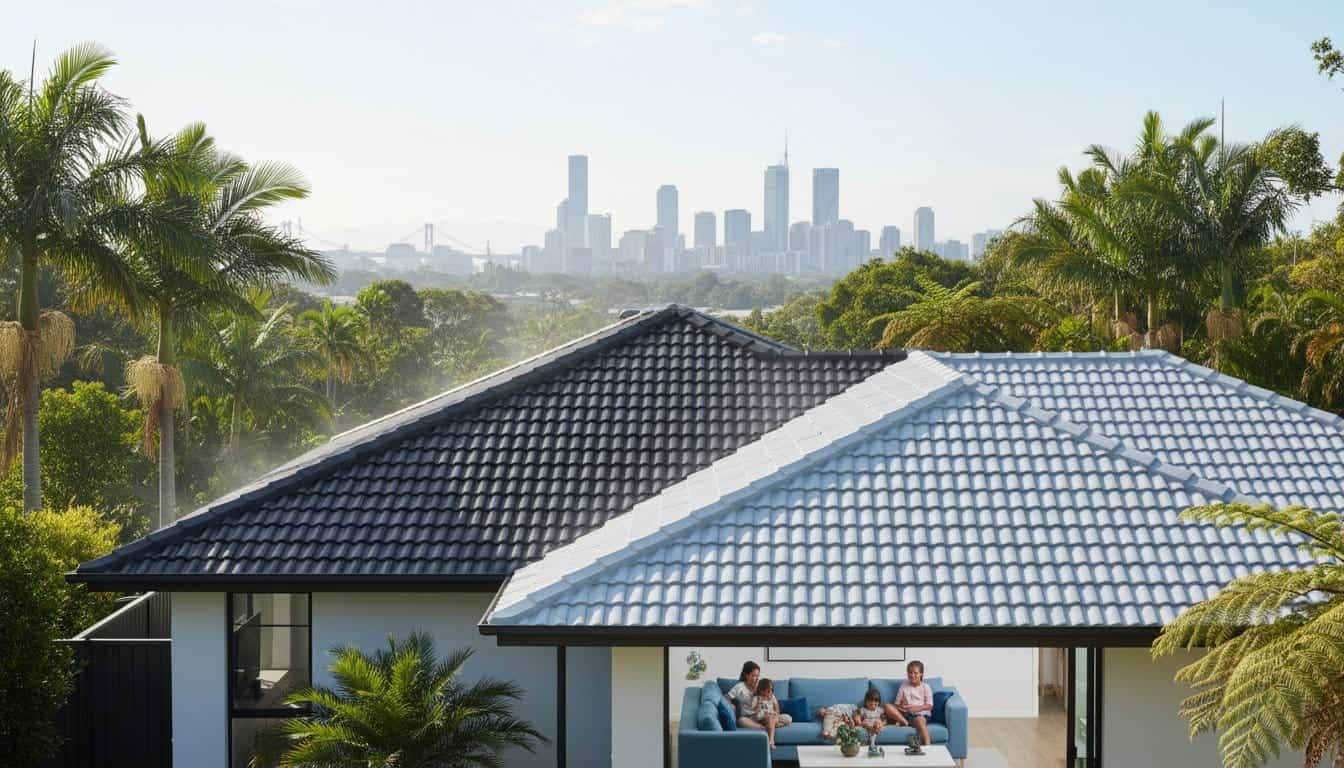
Could a simple change to your roof’s surface really be the difference between a stifling afternoon and a cool, comfortable home? On a typical 32°C day in Brisbane, an untreated roof can reach temperatures of 75°C, turning your ceiling into a giant radiator. You’ve likely felt that heat when your air conditioner struggles to keep up, leading to electricity bills that spike every January. It’s natural to be skeptical of big claims, which is why so many locals ask us, “do heat reflective paints really work,” or is it just another gimmick?
As a family owned business with over 35 years of experience as master painters, we believe in providing honest advice and quality craftsmanship. We’ve seen firsthand how premium coatings can lower roof surface temperatures by up to 20°C and reduce cooling costs by approximately 25% during a Queensland summer. In this guide, we’ll share the science behind solar reflectance and show you how a high standard roof restoration can protect your home and your wallet. We’ll break down the real-world performance you can expect from these coatings in the 2026 Brisbane climate.
Key Takeaways
- Understand the science behind the Solar Reflectance Index (SRI) and how specialized membranes outperform standard acrylic paints in the harsh Queensland sun.
- Get an honest, science-based answer to the question “do heat reflective paints really work” by analyzing the impact of roof pitch, insulation, and ventilation on thermal performance.
- Learn why professional application standards, such as precise “mil thickness” and thorough preparation, are critical for achieving maximum cooling results and a high ROI.
- Discover how high-SRI roof coatings can significantly lower your energy bills and improve indoor comfort during Brisbane’s intense summer months.
- Benefit from over 35 years of local experience to ensure your roof restoration uses premium, family-trusted products designed for long-term durability.
Understanding Heat Reflective Paint: More Than Just a Light Colour
Many homeowners ask, do heat reflective paints really work when they’re faced with another sweltering Queensland summer. As a family owned business with over 35 years of experience in the industry, we’ve seen how the right technology transforms a home’s comfort level. Heat reflective paint is a specialized coating engineered to minimize solar absorption. While standard acrylic paint is designed mainly for aesthetics and basic weatherproofing, these advanced membranes act as a thermal barrier for your entire property.
The logic relies on the science of reflective surfaces to bounce solar radiation back into the atmosphere before it can penetrate your roof tiles or metal sheets. A common misconception is that you need a bright white roof to achieve this. Modern pigment technology allows us to apply darker, contemporary colours that still offer high reflectivity. This means you can have a charcoal or deep blue roof that stays significantly cooler than a standard painted one.
To better understand this concept, watch this helpful video:
The Core Heat Reflective Paint Benefits
When clients ask do heat reflective paints really work, we point to the data from our previous restorations. These coatings can reduce roof surface temperatures by 20 to 30 degrees Celsius during peak midday heat. This massive drop prevents heat from soaking into your ceiling cavity, which can lower internal room temperatures by 6 to 10 degrees. Beyond comfort, this technology protects your roof structure. By keeping the surface cooler, we reduce the thermal expansion and contraction that often leads to cracked tiles and failed bedding.
Why Brisbane Homes Need This Technology
Brisbane frequently experiences a UV index of 11 or higher, which punishes standard roof paints and causes them to chalk and fade prematurely. Our local suburbs also suffer from the urban heat island effect, where hard surfaces trap heat and keep night-time temperatures high. Reflective coatings help mitigate this by releasing heat rather than storing it. While ceiling insulation is vital, it only stops heat once it’s already inside your roof space. A reflective membrane stops the heat at the first point of contact, making it the perfect partner for your existing insulation batts.
The Science of Cool: How Solar Reflectance Index (SRI) Works
To understand if do heat reflective paints really work, we need to look at the physics of how a roof interacts with the sun. It isn’t just about creating shade. It’s about how the coating manages energy at a molecular level. For over 30 years, we’ve seen how these coatings transform Brisbane homes from heat traps into comfortable living spaces by utilizing two specific scientific properties.
Reflectance vs. Emittance: The Two Pillars
Solar reflectance is the paint’s ability to bounce solar radiation back into the atmosphere before it can turn into heat. High quality coatings can reflect up to 85% of solar radiation. Thermal emittance is equally vital. It measures how efficiently a surface sheds any heat it has already absorbed. According to the U.S. Department of Energy on cool roofs, these properties together determine how much energy stays in your home. High emittance ensures your roof cools down rapidly once the sun sets, preventing that “oven effect” late into the evening. The Solar Reflectance Index (SRI) is the industry standard value that combines these two factors into a single score between 0 and 100.
The Evolution of Dark Reflective Pigments
Homeowners in Brisbane often prefer modern, dark aesthetics. Standard dark tints like Monument or Woodland Grey usually have low SRI ratings, often below 15. This means they absorb massive amounts of heat. Modern technology has changed this significantly. We now use specialized pigments that reflect infrared light while appearing dark to the human eye. This allows a “cool” version of a charcoal roof to stay up to 15 degrees Celsius cooler than its traditional counterpart.
The secret lies in the paint film. Premium coatings incorporate vacuum microspheres or specialized ceramic beads. These tiny structures create a thermal barrier that resists heat transfer through the coating. By choosing a high SRI product, you maintain your home’s style without sacrificing comfort. If you want to see how these coatings perform on your specific roof type, our team of accredited master painters can provide a detailed assessment of your home’s thermal needs.
- Reflectance: Prevents heat from entering the material initially.
- Emittance: Releases absorbed heat back into the air.
- Ceramic Beads: Act as microscopic insulators within the paint.
When asking do heat reflective paints really work, the answer is found in these measured SRI ratings. A standard dark roof might have an SRI of 5, while a heat reflective version of the same colour can reach an SRI of 35 or higher. This difference directly impacts your air conditioning costs and internal temperature levels.
Real-World Results: Does It Actually Work on Brisbane Roofs?
After 35 years of restoring homes across South East Queensland, we often get asked: do heat reflective paints really work in our sub-tropical climate? The answer depends on your specific roof system. We’ve seen professional applications lower internal temperatures by 3 to 6 degrees Celsius during a 32-degree Brisbane summer day. However, variables like your roof pitch and existing R-value insulation play a massive role. A flat roof with no ceiling cavity will feel the benefits much faster than a high-pitched Queenslander with thick ceiling batts already installed.
Performance on Different Roof Materials
Metal roofs, like Colorbond, show the most immediate results. Because steel has low thermal mass, it heats up and cools down rapidly. Applying a reflective coating prevents the metal from reaching those 70-degree surface temperatures in the first place. Concrete tiles are different. They have high thermal mass, meaning they soak up heat all day and radiate it into your bedrooms at 9:00 PM. Reflective paint acts as a barrier that slows this heat soak process significantly. For older terracotta tiles, we focus on sealing the porous surface first to ensure the reflective membrane bonds correctly and doesn’t flake off after three seasons.
The ‘Gimmick’ Reality Check: When It Doesn’t Work
Some skeptics claim these coatings are just overpriced house paint. This is usually true if the roof lacks proper ventilation. If you trap hot air in your roof space with no whirlybirds or eave vents, even the best paint won’t stop the house from warming up. It’s also vital to consider our coastal environment. In suburbs like Wynnum or Manly, salt spray and dirt buildup can reduce a coating’s solar reflectance by 20% within three years if it isn’t rinsed. When installed as part of a total restoration, most homeowners see a 15% to 25% reduction in their summer cooling costs. Beyond personal savings, these coatings help reduce urban heat islands in densely populated Brisbane pockets, making the whole neighborhood more comfortable. We believe in providing honest advice, so we always assess your roof’s ventilation before promising specific energy savings.
Maximising Your ROI: Professional Application and Maintenance
A premium product is only as effective as the surface it bonds to. To ensure your investment pays off, the application must be meticulous. Many homeowners ask, do heat reflective paints really work? The answer is a resounding yes, provided the coating reaches the correct dry film thickness. If the application is too thin, the paint won’t achieve its rated Solar Reflectance Index (SRI). For most Queensland roofs, our team aims for a specific wet film thickness of 250 to 300 microns to guarantee the thermal performance promised by the manufacturer.
Timing is also vital in our subtropical climate. We recommend scheduling your roof restoration during the drier months between May and September. This window avoids the high humidity and unpredictable afternoon storms that can interfere with the curing process. A properly cured membrane forms a resilient, flexible barrier that withstands the harsh Brisbane sun for decades without cracking or peeling.
The Professional Application Process
- Step 1: High-pressure cleaning. We use professional-grade equipment at 4,000 PSI to strip away oxidation, lichen, and stubborn dirt. This creates a clean, porous surface ready for maximum adhesion.
- Step 2: Repairs and re-pointing. On tile roofs, we replace cracked tiles and apply flexible pointing to the ridge caps. It’s essential the roof is structurally sound and leak-free before any coating begins.
- Step 3: Multi-coat application. A standard professional process involves a specialised primer followed by two thick coats of heat-reflective membrane. This build-up is what allows the roof to reflect up to 85% of solar radiation.
This preparatory work is critical. In cases where significant structural damage is found, a simple coating isn’t enough, and a full roof replacement or major repair might be necessary. Professional roofing contractors, such as the Florida-based Rainier Roofing LLC, emphasize that a healthy, well-maintained roof structure is the essential first step before considering any specialized surface treatments for energy efficiency.
Long-term Maintenance for Reflectivity
Keeping the surface clean is the secret to sustained cooling. Industry data shows that accumulated dust and urban pollution can reduce a roof’s SRI by up to 20% over a 5-year period. While modern coatings often feature dirt-resistant technologies that use rainwater to shed debris, a quick annual inspection is still best practice. When people ask do heat reflective paints really work over the long term, we show them how simple maintenance keeps the ROI high. We check for any physical damage or areas where soot has settled, ensuring the coating continues to bounce heat away from your living spaces.
Why Brisbane Roof & Paint is Your Expert for Heat Reflective Coatings
Experience matters when you’re dealing with the intense Queensland sun. At Brisbane Roof & Paint, we’ve spent over 35 years perfecting the art of protecting local homes from our harsh subtropical climate. You might wonder, do heat reflective paints really work in a city where summer temperatures regularly hit 35 degrees Celsius? The answer is a definitive yes, provided the application is handled by experts who understand thermal dynamics. As a family-owned business, we don’t just apply a coat of paint; we deliver a technical solution designed to last for decades.
Our commitment to quality starts with the products we select. We only use premium coatings with a high Solar Reflectance Index (SRI). These aren’t standard hardware store paints. They’re advanced membranes engineered to bounce infrared radiation away from your living spaces. Because we’re Accredited Master Painters, our work is backed by professional standards that ensure your warranty remains valid and your peace of mind stays intact. We integrate these coatings into a comprehensive roof restoration process, ensuring the underlying structure is sound before we focus on thermal performance.
Our Process: Quality You Can Trust
We believe a great finish starts long before the brush touches the roof. Our team conducts thorough 33-point inspections to identify cracked tiles, rusted screws, or compromised flashing. We offer customized colour consultations that balance your home’s aesthetic with energy efficiency. Choosing a specific “cool roof” shade can reduce surface temperatures by up to 15 degrees Celsius compared to traditional dark colours. Every project we undertake is backed by the Brisbane Roof & Paint guarantee, covering both our meticulous craftsmanship and the durability of the materials.
Start Your Energy-Efficient Journey Today
Investing in a professional roof restoration adds tangible, long-term value to your property. It’s not just about curb appeal; it’s about reducing your A$2,000 annual electricity bill by cutting down on air conditioning reliance. We make the process simple by offering free, no-obligation quotes for homeowners across the Brisbane region. If you’re curious about the numbers, you can check out our roof restoration cost guide to see how this investment fits your budget. Our team is ready to help you create a cooler, more comfortable home that stands up to the toughest Australian weather.
Invest in a Cooler Brisbane Home Today
Choosing the right roofing solution for our intense Queensland climate requires more than just picking a nice colour. The latest data reveals that high-quality coatings with a high Solar Reflectance Index can reduce roof surface temperatures by up to 15°C during a standard 32°C Brisbane afternoon. When homeowners ask, do heat reflective paints really work, the evidence from 2026 installations confirms they do, provided the application follows strict professional standards. These premium products reflect up to 85% of solar radiation, which helps lower your indoor temperatures and slashes your quarterly energy bills.
At Brisbane Roof & Paint, we bring over 35 years of local experience to every restoration project. As Accredited Master Painters and a family-owned and operated team, we don’t cut corners on preparation. We use specific premium materials to ensure your investment remains effective for decades. It’s about providing the craftsmanship your family deserves while protecting your biggest asset from the sun’s harsh rays.
Request Your Free Heat Reflective Coating Quote
We look forward to helping you create a more comfortable, energy-efficient home that stays cool all year round.
Frequently Asked Questions
Is heat reflective paint more expensive than regular roof paint?
Heat reflective paint generally costs between 15% and 25% more per litre than standard exterior roof membranes. While the initial investment for a premium product is higher, it’s a small price to pay for the long-term energy savings. Most Brisbane homeowners find that the extra A$200 to A$500 spent on materials for a standard three bedroom home pays for itself through reduced air conditioning usage within the first three years.
Does it only work if I paint my roof white?
You don’t have to choose white to see results because modern thermal coatings use specialized pigments to reflect infrared light. While a white roof can reflect up to 85% of solar radiation, darker “cool” colours can still achieve a Total Solar Reflectance (TSR) of 40% or higher. This means you can maintain a charcoal or terracotta aesthetic while still significantly lowering your internal ceiling temperatures.
How much can I actually save on my electricity bills in Brisbane?
Brisbane residents typically see a reduction of 20% to 30% in their summer cooling costs after a professional application. If your quarterly summer electricity bill is A$600, you could save roughly A$120 to A$180 per quarter. These savings occur because do heat reflective paints really work by reducing surface temperatures by up to 15 degrees Celsius, which stops your air conditioner from working overtime during 35 degree days.
Can heat reflective paint be applied to both metal and tile roofs?
Heat reflective coatings are suitable for both concrete tile and Colorbond metal roofs common in Queensland. The application process stays the same, involving a high pressure clean, a specialized primer, and two thick coats of the reflective membrane. Our team has applied these products to over 1,500 Brisbane homes, ensuring the bond is permanent regardless of whether your roof is made of metal or masonry.
How long does the reflective effect last before I need to repaint?
A high quality thermal coating will maintain its reflective properties for 10 to 15 years before a refresh is necessary. Most premium manufacturers provide a 10 year material warranty, but the actual performance often lasts longer if the roof is kept clean. We recommend a light wash every 24 months to remove dust and salt spray, as surface dirt can reduce the paint’s ability to bounce away solar radiation.
Does the paint help with insulation during the winter months?
Heat reflective paint is primarily designed to keep heat out during summer rather than trapping it inside during winter. While it provides a slight barrier, it doesn’t replace traditional bulk insulation like batts or blankets. However, since Brisbane experiences roughly 280 sunny days a year, the summer cooling benefits far outweigh any minor heat loss during our short, mild winters.
Will the paint still work if my roof is partially shaded by trees?
The paint remains effective on any portion of the roof that receives direct sunlight throughout the day. Even if 30% of your home is shaded, the remaining 70% of the roof surface still acts as a massive radiator that transfers heat into your living spaces. Applying the coating ensures that the exposed areas don’t reach the 60 degree temperatures typical of untreated roofs, keeping the overall building envelope much cooler.