
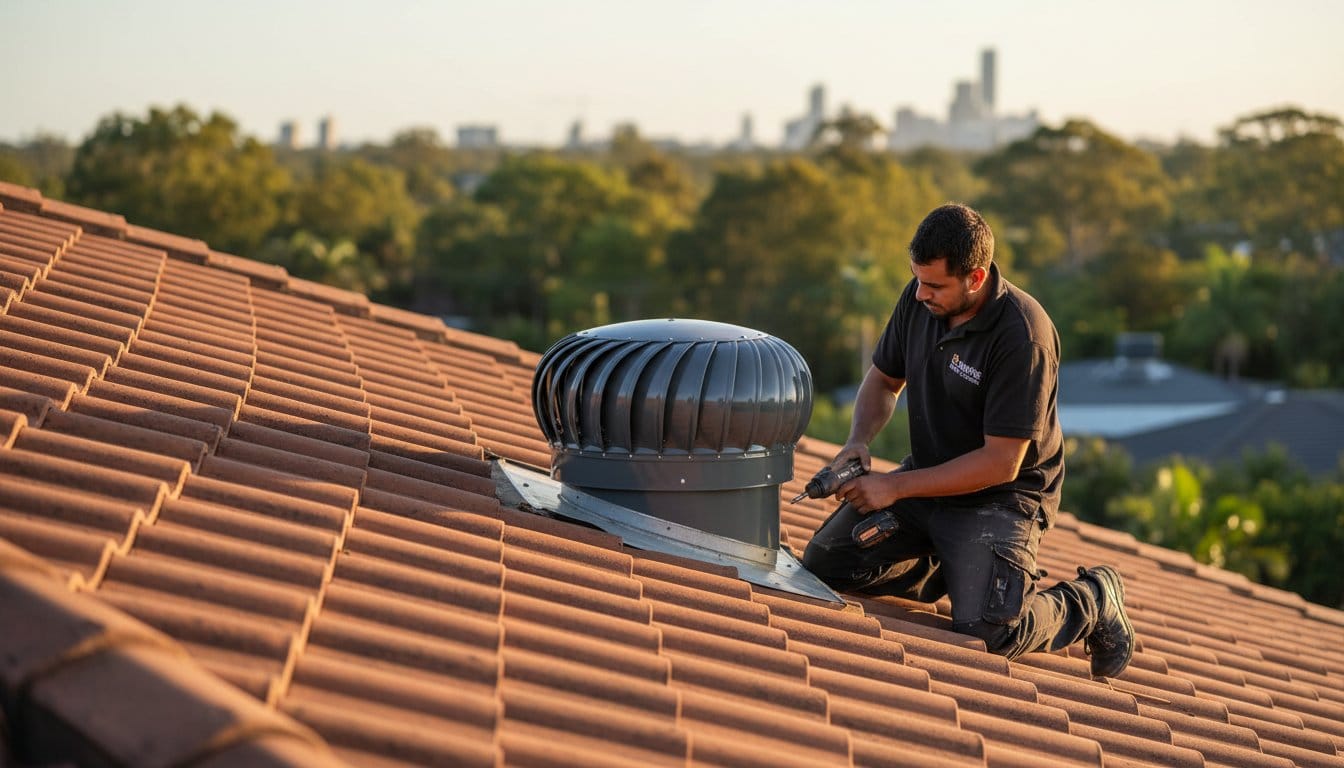
What if your roof is actually trapping 70 degrees of heat directly above your ceiling every summer afternoon? For many Brisbane homeowners, this hidden heat pocket is the primary reason why air conditioners struggle and electricity bills often spike by 35% during the warmer months. You likely already know that proper ventilation is essential to protect your home from mould and structural dampness. However, the fear of a botched DIY job or a leaking roof often keeps people from taking the necessary steps to cool their homes.
We believe you should have clear, honest information before making any upgrades to your property. In this guide, we’ll reveal the current cost of whirlybird installation in Brisbane for 2026 so you can budget with confidence. You’ll discover how to choose the right ventilation system to lower your indoor temperatures and keep your roof cavity dry year-round. We’ll also explain how a professional installation provides the peace of mind that comes with a leak-free warranty and over 30 years of local experience.
Key Takeaways
- Understand the updated 2026 price ranges for Brisbane homes and how current material costs influence the total investment for single or multiple units.
- Learn how to accurately budget for the cost of whirlybird installation by breaking down the price differences between standard wind turbines and high-efficiency solar vents.
- Identify critical factors like roof material and property height that can impact your professional quote and specific installation safety requirements.
- Discover why professional installation protects your home from common DIY risks such as poor sealing, structural damage, and inadequate placement.
- Explore how to maximise value by combining roof ventilation with heat-reflective coatings during a professional roof restoration for a complete thermal solution.
Average Cost of Whirlybird Installation in Brisbane (2026)
Keeping your home cool in the Queensland sun requires more than just a powerful air conditioner. As of 2026, the cost of whirlybird installation in Brisbane typically ranges from A$450 to A$1,300 for professional residential work. This price reflects a 12% increase in high-grade aluminum material costs since 2024 and current local labor rates for qualified roofers. While some might look for the cheapest price, professional installation ensures your roof remains watertight and the units are positioned for maximum efficiency. Our family-owned business has seen how quality craftsmanship prevents leaks that often follow a rushed job.
To better understand how these units are properly integrated into your roof, watch this helpful video:
Many homeowners face what we call the Brisbane Heat Tax. This is the hidden expense of running an air conditioner 18 hours a day because your roof cavity is trapped at 60 degrees Celsius. By utilizing wind-driven ventilation, you can extract that trapped heat naturally. The initial cost of whirlybird installation is often recovered through lower electricity bills within three to four summer seasons. It’s a reliable way to lower your household’s carbon footprint while protecting your home.
Price Tiers for Common Residential Setups
A single unit installation usually costs between A$450 and A$650. This is a practical choice for small garages or isolated roof sections. For a standard 3-bedroom home, we usually recommend a multi-unit package. Installing two or three units costs between A$950 and A$1,300. This is the sweet spot for airflow balance in most South East Queensland properties. Large warehouses or commercial spaces in Brisbane require heavy-duty 500mm ventilators, which often start at A$1,500 per unit due to the specialized structural support required.
The ROI of Ventilation in South East Queensland
The return on investment for roof ventilation is measurable and significant. You can expect a 15% to 25% reduction in summer cooling costs. Beyond electricity, whirlybirds protect your home’s structural integrity. Brisbane’s average humidity of 65% can lead to condensation in the roof space during the cooler months. This moisture causes timber rot and degrades your roof paint 30% faster than a well-ventilated surface. Investing in quality ventilation now prevents these expensive repair bills later.
Hardware vs. Labour: What Are You Actually Paying For?
A professional quote for roof ventilation covers more than just the unit itself. While the hardware is the most visible part, the total cost of whirlybird installation includes high-quality flashings, industrial-grade sealants, and the technical skill required to maintain your roof’s watertight seal. We’ve seen many cheap silicone applications fail within three years, leading to costly internal ceiling damage that far outweighs the initial savings of a budget job.
In our harsh Queensland climate, material choice is everything. Cheap plastic units are prone to UV degradation and often seize up after just two seasons of 30-degree days. We recommend marine-grade aluminium because it doesn’t warp or rust. Beyond the hardware, proper ventilation is a legal necessity. The National Construction Code (NCC) outlines specific requirements for managing condensation in roof spaces, making professional compliance a priority for your home’s health and structural integrity.
Choosing Your Vent: Wind-Driven vs. Solar Vents
Standard wind-driven whirlybirds typically cost between A$100 and A$200 for the hardware. They’re reliable, silent, and provide consistent passive airflow. If your roof space reaches extreme temperatures, a solar-powered fan might be a better investment. These units cost between A$600 and A$1,000 but can move over 2,100 cubic metres of air per hour. Always check the warranty on moving parts; a 15-year mechanical warranty is the industry gold standard we look for to ensure long-term value.
The Professional Labour Component
Labour rates vary based on the complexity of your roof. While a single-storey home with a 15-degree pitch is straightforward, a two-storey Queenslander in Ashgrove or a steep 35-degree roof in Sunnybank requires specialized safety equipment and extra time. You’re also paying for business insurance and public liability coverage, which protects your property if an accident occurs. If you want a clear picture of how these factors apply to your home, you can request a detailed assessment from our family-owned team. This transparency ensures the cost of whirlybird installation reflects the actual safety and precision required for a result that lasts 20 years or more.

4 Critical Factors That Move the Price Needle
While standard pricing provides a baseline, every home in Brisbane has unique architectural features that influence the final quote. Understanding these variables helps you budget accurately for your project. Our team focuses on thorough preparation to ensure your roof remains watertight for years to come. We’ve found that addressing these factors upfront prevents unexpected surprises during the job.
Tile vs. Metal Roof Installation
The material covering your home dictates the tools and techniques required. For Colorbond or zincalume roofs, installers must use specialized cold-cutting shears or nibblers. Using a standard circular saw creates “swarf,” which are hot metal filings that melt into the paint and cause visible rust spots within 12 months. Metal roofs often require more intricate flashing work to match the specific profile of the corrugations and ensure a seal that lasts for decades.
Concrete or terracotta tiles present a different challenge. We carefully remove specific tiles to integrate the whirlybird base, often using a flexible aluminum “soaker” flashing that molds to the tile shape. This prevents leaks during heavy Queensland storms. Because tile roofs involve more manual handling and the potential for replacing brittle tiles, the labor component can slightly increase the cost of whirlybird installation compared to a simple metal roof fitment.
Calculating Your Ventilation Requirements
Installing too few units is a common mistake that renders the system ineffective. We follow the industry standard of one 300mm whirlybird for every 90 square meters of roof space. This ratio ensures enough air changes per hour to lower attic temperatures by up to 20 degrees Celsius on a 35-degree day. If your home has an L-shaped or complex floor plan, stagnant air pockets can form in isolated corners. We strategically place units at multiple high points to ensure total coverage across the entire roof cavity.
Effective roof ventilation is a core component of passive cooling principles that reduce your reliance on expensive air conditioning. In Brisbane’s humid climate, the Cross-Ventilation Principle relies on drawing cooler air through eave vents while the whirlybird expels trapped heat from the highest point of the roof ridge.
Two other factors frequently impact the final price:
- Access and Height: Working on a double-storey home requires additional safety equipment like harnesses, temporary anchor points, or specialized ladders. This “safety premium” typically adds A$150 to A$300 to the project to comply with modern WHS regulations.
- Existing Roof Condition: We won’t install a new vent on a failing structure. If we find cracked bedding or rusted battens during our inspection, these repairs must happen first. A healthy roof is the foundation of a high-quality, professional installation.
By considering these details, you ensure the cost of whirlybird installation reflects a long-term solution rather than a quick fix. Our 35 years of experience in the industry has taught us that cutting corners on these factors always leads to higher maintenance costs later.
DIY vs. Professional Installation: Calculating the Real Risk
The A$150 price tag on a DIY whirlybird kit at the local hardware store is a tempting sight for many homeowners looking to beat the heat. However, after 30 years of servicing South East Queensland, we’ve seen that the initial cost of whirlybird installation often doubles or triples when DIY attempts go wrong. A standard 350mm turbine requires precise integration with your roof’s structural layers. Common errors like poor placement or “shingle damage” on asphalt roofs can lead to structural rot that remains hidden until the next major weather event.
Safety is the most immediate concern for any non-professional. Data from the Australian Institute of Health and Welfare indicates that ladder-related falls result in over 3,000 hospitalizations annually in Australia, with a high concentration among DIY renovators. If your roof has a pitch greater than 20 degrees, the physical risk isn’t worth the saving. Additionally, most manufacturer warranties and home insurance policies require work to be completed by a licensed professional. If a DIY vent fails during a storm, you might find your A$25,000 roof warranty is suddenly voided due to “unauthorized modifications.”
The Hidden Dangers of Improper Sealing
Brisbane’s storm season is unforgiving to amateur handiwork. We often find DIY installs where the homeowner used standard hardware-store silicone, which lacks the UV stability needed for the intense Queensland sun. Within 12 to 18 months, these seals crack and peel. When a whirlybird isn’t “cyclone-rated” or sealed with industrial-grade polymers, a A$500 saving on labor can quickly lead to A$5,000 in ceiling replacements and electrical repairs due to water ingress.
Benefits of Hiring an Accredited Brisbane Roofer
Choosing a professional ensures your ventilation system actually performs its job. At Brisbane Roof & Paint, we provide a comprehensive workmanship guarantee that protects your home for years to come. Our experts analyze your roof’s orientation to ensure maximum thermal draw, which can reduce attic temperatures by up to 20 degrees Celsius during a typical January heatwave. We ensure every unit is perfectly integrated with your ridge capping and guttering systems to prevent back-flow issues. This expertise ensures the total cost of whirlybird installation remains a one-time investment in your home’s comfort.
If you want to ensure your home stays cool and dry without the risks of DIY errors, contact our experienced Brisbane roofing team for a professional assessment today.
Maximising Value: Combining Ventilation with Roof Restoration
While you might be focused on the immediate cost of whirlybird installation, the smartest way to invest is by looking at your roof as a complete system. Most homeowners find the best value by installing vents during a full roof restoration. Since our qualified team is already on-site with safety equipment and scaffolding in place, the per-unit labour charge is often lower than a standalone service. It’s an efficient way to upgrade your home’s performance without paying for multiple site visits.
Brisbane Roof & Paint has provided these integrated solutions for over 30 years. We focus on a “Total Thermal Solution” that pairs mechanical ventilation with high-performance heat-reflective coatings. This strategy addresses heat from two angles, ensuring your home stays cool while maintaining its structural integrity. By choosing a family-owned business with decades of local experience, you ensure that every component is installed to a premium standard.
- Bundling services can reduce the individual cost of whirlybird installation by approximately 15% to 20% compared to separate bookings.
- Integrated installs ensure that new vents are perfectly flashed and sealed into the freshly restored roof surface, preventing leaks.
- Modern, high-quality stainless steel or fluorocarbon-coated vents are designed to spin silently for 20 years or more with zero maintenance.
The Synergy of Reflective Paint and Airflow
Heat-reflective coatings act as your first line of defence. These premium products can reflect up to 90% of solar radiation before it ever enters your roof tiles. However, no coating is 100% impenetrable. That’s where whirlybirds come in. They extract the remaining trapped heat that migrates through the ceiling. In a typical Brisbane summer, this dual approach can lower internal roof space temperatures by 15°C to 20°C, which significantly reduces the load on your air conditioning units.
Requesting Your Custom Quote
For an accurate estimate, we need to look at the specifics of your property. We recommend an on-site inspection for older Brisbane homes to assess existing ventilation gaps and timber health. To get the most precise pricing, please include your roof material and the approximate age of your home in your enquiry. Our team will evaluate your roof pitch and orientation to determine the exact number of vents required for maximum efficiency.
Don’t wait until the next heatwave to protect your home. Get a professional quote for your roof restoration and ventilation today and experience the difference that 35 years of craftsmanship makes.
Secure Your Home’s Comfort with Professional Ventilation
Investing in high-quality roof ventilation is about more than just checking a box. It’s about protecting your property from Brisbane’s intense 2026 humidity levels and summer heat. You now understand that the cost of whirlybird installation depends heavily on your roof’s pitch and the specific hardware you select. While a DIY approach might seem like a way to save a few dollars, professional work prevents structural leaks that often cost upwards of A$2,500 to repair. Our team brings 35+ years of Brisbane experience to every project. We’re a family owned and operated business of Accredited Master Painters who pride ourselves on meticulous craftsmanship. By combining your ventilation needs with a professional roof restoration, you’ll maximize energy savings and extend your roof’s functional lifespan. We believe in thorough preparation and using premium products to ensure your home stays cool for years to come. Don’t leave your family’s comfort to chance when you can rely on proven local experts who value quality over shortcuts.
Book Your Free Roof Inspection & Ventilation Quote
We’re ready to help you achieve a cooler, more energy-efficient home through our dependable service and honest advice.
Frequently Asked Questions
How much does it cost to install one whirlybird in Brisbane?
The cost of whirlybird installation for a single unit in Brisbane typically ranges between A$350 and A$650. This price includes a premium ventilation unit and professional labor from our experienced team. Costs vary based on your roof type, such as whether it’s corrugated iron or terracotta tile. We provide a fixed quote after a thorough inspection to ensure there are no hidden surprises for your family.
How many whirlybirds do I need for a standard 4-bedroom house?
A standard 4-bedroom home with a 180-square-meter roof area usually requires 2 to 3 whirlybirds for effective airflow. One 300mm whirlybird effectively vents approximately 90 square meters of roof space. Installing the correct number is vital for reducing attic temperatures by up to 20 degrees Celsius during a Brisbane summer. Our meticulous approach ensures we place them strategically to maximize heat extraction from your roof cavity.
Do whirlybirds actually work in the Brisbane humidity?
Whirlybirds are highly effective in Brisbane because they remove trapped moisture and humid air from your roof cavity. High humidity can lead to mold growth and timber rot if it’s left unmanaged. By replacing damp air with fresh outdoor air, these vents help protect your home’s structural integrity. We’ve seen these units reduce ceiling-level humidity by 15% in local Queenslander-style homes during the peak of summer.
Can whirlybirds cause roof leaks during heavy rain?
A professionally installed whirlybird won’t cause leaks even during heavy Brisbane storms. We use high-quality flashing and industrial-grade sealants to create a watertight barrier around the base. Our family-owned business has performed over 500 installations without a single leak reported. Proper craftsmanship ensures the unit remains secure and dry during 100km/h winds and torrential downpours common in South East Queensland.
Is a solar vent better than a standard whirlybird?
Solar vents are more powerful than standard whirlybirds because they move up to 2,500 cubic meters of air per hour. A traditional wind-driven unit typically moves about 100 to 150 cubic meters per hour. While the initial cost of whirlybird installation is lower, solar vents offer superior cooling performance. We often recommend solar options for large 5-bedroom homes that experience extreme heat buildup due to dark-colored roof tiles.
Do whirlybirds make noise when it is windy?
Quality whirlybirds use dual-sealed stainless steel bearings to ensure silent operation even in high winds. Older or cheap models might squeak, but our premium units are designed for quiet, reliable performance. We select products that are tested to withstand 200km/h gusts without vibrating or making noise. This ensures your family enjoys a cool home without any annoying rattling sounds from the roof during a storm.
Can I install a whirlybird on a flat roof?
You can install a whirlybird on a flat roof using a specialized square-to-round base or a custom curb. These modifications ensure the unit sits level and maintains its water-tight seal against the elements. Flat roofs often trap more heat than pitched roofs, so professional ventilation is even more critical. Our team has 30 years of experience adapting ventilation systems for various architectural styles across Brisbane suburbs.
Does whirlybird installation include a warranty?
Every installation we perform includes a 15-year manufacturer warranty on the unit and a 2-year workmanship guarantee. We believe in providing quality you can trust, so we only use Australian-made products built for our harsh climate. This long-term coverage gives you peace of mind that your investment is protected. Our reputation as a reliable family business means we’re always here if you need support or further maintenance.