
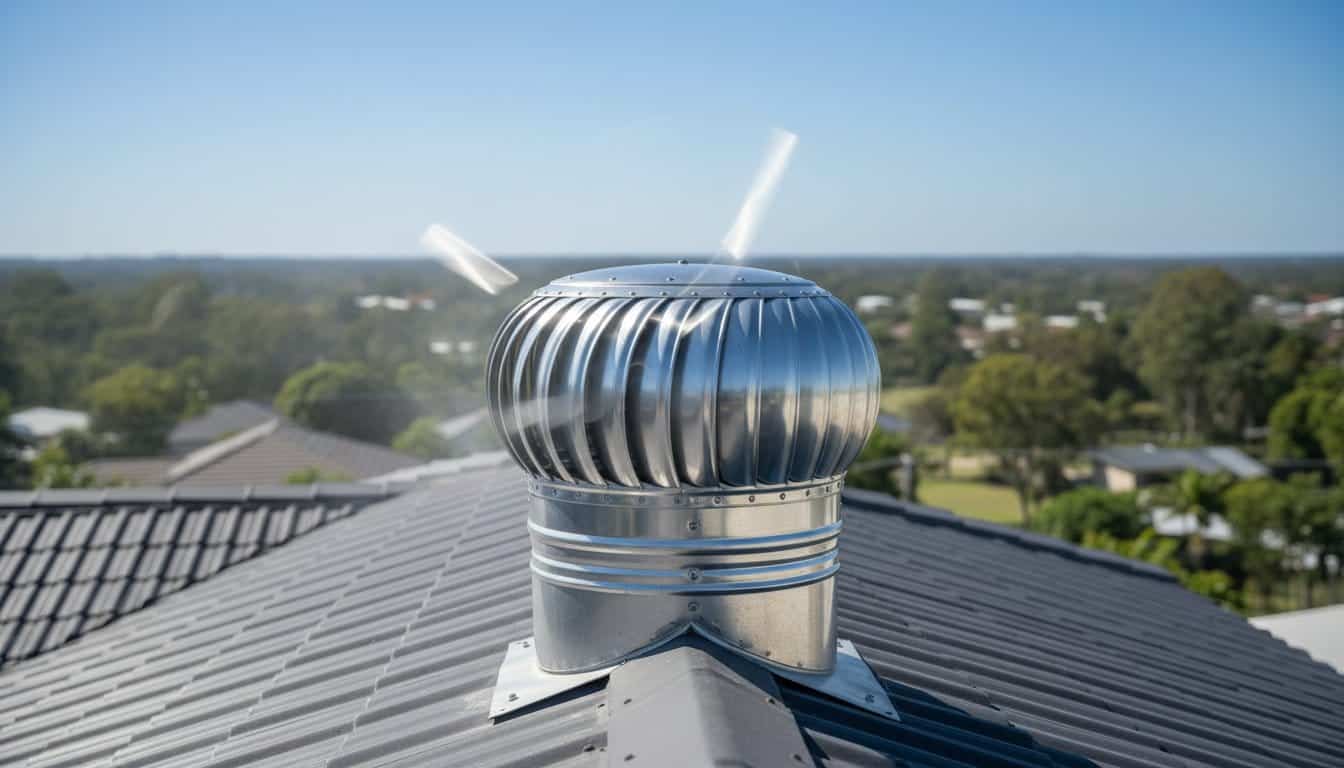
As another sweltering Brisbane summer approaches, the battle to keep your home cool begins. The air conditioner works overtime, your power bills climb, and the upstairs rooms can still feel like a sauna. You’ve likely seen them spinning on rooftops all over the city-the simple, silver domes of a whirlybird. For decades, they’ve been a common sight, but a persistent question remains for many homeowners: do they actually make a difference, or are they just an old-fashioned gimmick?
Making a decision that involves cutting a hole in your roof requires reliable information, not just sales talk. As experienced Brisbane roofers, we believe in providing clear, honest advice. In this guide, we’ll break down exactly how these wind-driven turbines work and explore their true effectiveness against our city’s unique heat and humidity. We’ll give you a professional assessment of the pros and cons, address concerns about leaks, and help you determine if a whirlybird is the right, high-quality solution for making your home more comfortable this summer.
What is a Whirlybird? How It Works in Simple Terms
If you’ve ever looked at the rooftops around Brisbane, you’ve likely seen them: small, spinning domes that turn with the breeze. These are commonly known as whirlybirds. In professional terms, a whirlybird is a wind-driven, passive roof ventilator. Its primary job is to tackle the intense heat that gets trapped in your roof cavity, especially during our hot Queensland summers.
Think of it like a modern chimney for heat. Instead of smoke, it uses natural forces to draw hot, stale, and often moist air out of your attic space. This simple but effective process helps regulate the temperature in your home, reduce cooling costs, and prevent moisture buildup. Most are made from durable, lightweight materials like aluminium or steel to withstand the harsh Australian climate.
To better understand this concept, watch this helpful video:
The Science of Passive Ventilation
The effectiveness of a whirlybird lies in two simple scientific principles: convection and the Venturi effect. First, as the sun beats down on your roof, the air inside your attic heats up and naturally rises (convection). As the wind blows, it spins the turbine’s fins, creating a low-pressure zone, or a vacuum. These Wind-powered roof turbines use this vacuum to actively pull the rising hot air out of the roof cavity. To complete the cycle, cooler, fresher air is drawn into the attic through vents in your eaves, creating continuous, refreshing airflow.
Key Components of a Whirlybird
While they look simple, these ventilators are designed with several key parts working together to ensure reliable, long-lasting performance:
- The Turbine Head: This is the spinning dome with angled fins (vanes) designed to catch even the slightest breeze.
- The Throat/Base: The cylindrical section that connects the spinning head to the roof structure.
- The Flashing: A flat metal sheet installed around the base to create a waterproof seal, preventing any leaks where the ventilator penetrates the roof.
- Internal Bearings: High-quality, sealed bearings sit inside, allowing the turbine head to spin freely and quietly for years.
The Big Question: Do Whirlybirds Actually Cool Your Home?
This is one of the most common questions we hear from Brisbane homeowners, and the answer is a qualified yes. A whirlybird doesn’t cool your living room like an air conditioner. Instead, its job is to cool your roof space, and by doing so, it indirectly makes your home more comfortable.
Think of it as a supporting player, not the star of the show. By actively removing super-heated air from your roof cavity, it reduces the amount of radiant heat that pushes down through your ceiling. This allows your existing insulation to perform more effectively and lightens the load on your air conditioning system, which can lead to energy savings and improved comfort.
It’s important to set realistic expectations: a roof ventilator provides a noticeable temperature reduction in the roof cavity, but it is not a replacement for air conditioning on a scorching Brisbane day.
How They Reduce Trapped Heat in Brisbane Summers
On a hot summer afternoon, the air trapped in your roof cavity can easily reach temperatures of 60-70°C. This intense heat radiates downwards, warming up your ceiling and, consequently, the rooms below. A whirlybird works by using wind and natural convection to create a vacuum effect, constantly pulling this stagnant, hot air out and replacing it with cooler, ambient air from outside. Lowering the roof space temperature by even a few degrees significantly lessens the heat load on your home, meaning your air conditioner doesn’t have to work nearly as hard to maintain a comfortable temperature.
Factors That Limit Their Effectiveness
While effective under the right conditions, a roof ventilator’s performance depends heavily on several key factors. For a truly professional installation, it’s crucial to consider the whole system, not just the unit itself.
- Wind Dependency: As wind-driven turbines, they are most effective on breezy days. Their performance is noticeably reduced on still, humid days when heat can be at its most oppressive.
- Inadequate Intake Vents: For a ventilation system to work, it needs both an exit (the turbine) and an entry point. Without sufficient intake vents, usually in the eaves, the system can’t create a proper airflow loop. Ensuring adequate airflow is a key part of meeting the National Construction Code (NCC) ventilation requirements and is essential for performance.
- Poor Installation: Incorrect placement is a common issue. A ventilator should be installed as close to the roof ridge as possible to maximise the extraction of the hottest air. Improper sealing can also lead to leaks and negate any benefits.
- Roof Size and Pitch: A single ventilator is rarely sufficient for an entire roof. The number of units required depends on the total area and pitch of your roof, something an experienced roofer can calculate accurately.
The Pros and Cons of Installing Whirlybirds on Your Roof
Like any roofing component, whirlybirds have their own set of strengths and weaknesses. As experienced Brisbane roofers, we believe in providing honest, practical advice to help you make the best choice for your home. Understanding both sides of the coin is key to deciding if this popular ventilation solution is right for your property.
Advantages of Whirlybirds
These simple, time-tested devices offer several compelling benefits, particularly for homeowners looking for an efficient and affordable solution.
- No Running Costs: Powered entirely by wind and the natural convection of rising hot air, they require no electricity. This means zero impact on your power bill after the initial installation.
- Low Initial Investment: Compared to sophisticated powered roof vents or whole-of-house systems, whirlybirds are a very cost-effective option to purchase and install, making them accessible for most budgets.
- Reduces Moisture & Mould: In Brisbane’s humid climate, trapped moisture in the roof cavity can lead to timber rot and mould growth. By continuously venting this damp air, they help protect the structural integrity of your roof frame and insulation.
- Year-Round Operation: Ventilation is important in every season. These turbines work to expel trapped hot air during the sweltering summer months and help reduce condensation and moisture build-up during the cooler, wetter season.
Potential Disadvantages to Consider
While effective in many situations, it’s important to be aware of their limitations before committing to an installation. A quality product and professional fitting can mitigate most of these concerns.
- Performance Varies: Their effectiveness is directly tied to wind speed. On still, hot Brisbane days when you need ventilation most, their performance can be minimal. In fact, a thorough scientific evaluation of turbine ventilator performance shows that actual ventilation rates can differ significantly based on weather conditions.
- Potential for Noise: Cheaper, lower-quality models with poor bearings can become squeaky or noisy over time, especially in high winds. Investing in a quality, well-made product is essential to avoid this irritation.
- Risk of Leaks: This is not a flaw of the product itself, but of poor installation. An incorrectly cut and sealed roof penetration is a prime spot for leaks. This is why professional installation by an experienced roofer is non-negotiable.
- Maintenance: While minimal, they aren’t entirely “set and forget.” We recommend an occasional check during your regular gutter clean to ensure the bearings are clear of debris and the fins are spinning freely.
Whirlybirds vs. Other Roof Cooling & Ventilation Solutions
While a whirlybird is a popular and cost-effective ventilation device, it’s just one piece of the puzzle when it comes to cooling your Brisbane home. As experienced roofing professionals, we believe in providing a complete picture so you can make an informed decision. Understanding how it compares to other modern solutions is key to achieving the best results for your property.
The right choice often depends on your home’s specific needs, your roof’s design, and your budget. Let’s look at two common alternatives homeowners consider.
Comparison with Solar-Powered Vents
Solar-powered roof vents are an active ventilation solution. They use a small, built-in solar panel to power a fan, which actively pulls hot air and moisture out of your roof cavity. This makes them a step up in performance from a passive, wind-driven whirlybird.
- Pro: They are most effective on hot, still, sunny days-exactly when your roof space is accumulating the most heat. Unlike wind turbines, their performance isn’t dependent on a breeze.
- Con: The initial investment is significantly higher than for a standard turbine vent. They also contain mechanical and electrical components (a motor and solar panel) that can wear out and require maintenance or replacement over time.
Comparison with Heat Reflective Coatings
Rather than removing hot air after it’s already entered your roof space, a heat reflective coating works to prevent the heat from building up in the first place. This advanced membrane is applied to your roof’s surface and contains special pigments that reflect the sun’s infrared radiation.
This preventative approach is incredibly effective, stopping heat at the source and dramatically lowering the surface temperature of your roof. By keeping the roof material itself cooler, less heat is transferred into the attic and, subsequently, into your living areas. This can lead to a more comfortable home and a noticeable reduction in your reliance on air conditioning.
This solution offers a dual benefit of protecting your roof while providing exceptional thermal performance. Learn more about our heat reflective roof coatings.
Key Considerations Before Installing a Whirlybird
While a whirlybird can be an effective and affordable way to cool your Brisbane home, its success depends entirely on proper assessment and professional installation. Getting the details right is the difference between enjoying a cooler home and dealing with a costly roof leak. Before you proceed, it’s essential to consider a few key factors to ensure you get the best possible result.
Roof Type and Suitability
Roof ventilators can be installed on almost any roof, but the process varies. On a metal roof, a precise hole is cut and sealed with a specialised metal flashing. For a tiled roof, a tile is removed and replaced with a custom flashing kit designed to integrate seamlessly. A professional assessment is vital to not only choose the right kit but also to confirm your roof’s structural integrity is sound.
Optimal Placement and Quantity
Where you place your roof ventilator is critical to its performance. For maximum effectiveness, it must be positioned as close to the roof ridge as possible, as this is where the hottest air accumulates. It’s also important to avoid roof valleys where water naturally channels. As a general guide:
- Aim for one to two ventilators for every 90 square metres of roof space.
- The ideal number depends on your roof pitch, attic size, and specific cooling needs.
- A professional can calculate the optimal number and placement for balanced airflow.
Why Professional Installation is Crucial
The single biggest risk of installing a whirlybird is a poor, non-waterproof seal. A small gap or incorrectly fitted flashing can allow water to seep into your roof cavity, leading to timber rot, damaged insulation, and stained ceilings. While a DIY approach might seem tempting, the cost of repairing water damage far outweighs the initial savings.
A qualified roofer guarantees a meticulous, leak-proof installation. We use premium materials and proven techniques to ensure the flashing is perfectly sealed, protecting your home for years to come. For complete peace of mind and craftsmanship you can rely on, trust Brisbane’s experts for a leak-proof installation.
The Final Verdict: Is a Whirlybird Right for Your Brisbane Home?
So, do whirlybirds really work? The answer is yes-they are an effective, energy-free way to reduce heat build-up in your roof space and lower moisture levels. However, their performance depends heavily on factors like your roof’s design, existing insulation, and Brisbane’s specific climate conditions. While they are a fantastic budget-friendly option, it’s crucial to weigh them against other solutions to find the perfect fit for your home’s unique needs.
Determining if a whirlybird installation is the most effective ventilation strategy for your property requires a professional assessment. As a family-owned and operated business with over 35 years of local Brisbane experience, we are committed to providing honest advice and quality craftsmanship. We can inspect your roof, assess its ventilation needs, and recommend the best solution to keep your home cool and comfortable.
Take the guesswork out of cooling your home. Get a professional roof inspection and quote today. Let our team help you make a confident, well-informed decision for a more comfortable home this summer.
Frequently Asked Questions About Whirlybirds
How many whirlybirds do I need for my house?
As a general guide, we recommend one to two whirlybirds for the average-sized Brisbane home. The exact number depends on your roof’s total area, its pitch, and even its colour. Darker roofs absorb more heat and may benefit from additional ventilation. For a precise assessment, it’s always best to consult with an experienced roofing professional who can evaluate your specific needs and ensure optimal airflow for effective cooling and moisture removal.
Will a whirlybird make my roof leak?
When installed correctly by a qualified professional, a whirlybird will not cause your roof to leak. The key to a watertight seal is meticulous installation, which includes using high-quality flashing that fits your specific roof profile (tile or metal) and applying premium-grade sealants. An experienced roofer ensures the unit is securely fitted and completely weatherproof, giving you peace of mind and protecting your home from water ingress for years to come.
Are whirlybirds noisy? What causes them to squeak?
A properly functioning, high-quality whirlybird should be virtually silent. If you hear squeaking or grinding noises, it is almost always due to worn-out bearings inside the turbine. This can happen over time with older units or is a common issue with lower-quality models. Modern whirlybirds are engineered with durable, self-lubricating bearings for long-lasting, quiet operation. If your current ventilator is noisy, it is likely a sign that it needs to be replaced.
Do whirlybirds work on cloudy or still days?
Yes, they remain effective even without strong wind or direct sun. Whirlybirds operate on two principles: wind power and the stack effect. On calm but hot days, the hot air trapped in your roof cavity is naturally buoyant and rises. This rising air is enough to turn the turbine and vent the heat. On windy days, the wind provides the power. This dual-action ensures your roof space is being ventilated in most Brisbane weather conditions.
How much does it cost to install a whirlybird in Brisbane?
The cost to supply and install a standard whirlybird in Brisbane typically ranges from A$300 to A$650 per unit. The final price can vary depending on the type and brand of ventilator, your roof material (e.g., tile or Colorbond metal), and the complexity of the installation. For a reliable and accurate price, we recommend obtaining a detailed quote from a professional roofing company who can assess your property and provide a firm cost upfront.
Do whirlybirds need regular maintenance?
Whirlybirds are designed to be very low-maintenance. We recommend a simple visual inspection once a year, which can be done during a routine roof check or gutter clean. You just need to ensure the turbine spins freely and isn’t obstructed by leaves or debris. Quality modern units are built with sealed bearings that don’t require oiling. Choosing a durable, well-made ventilator from the start is the best way to ensure a long, maintenance-free service life.